
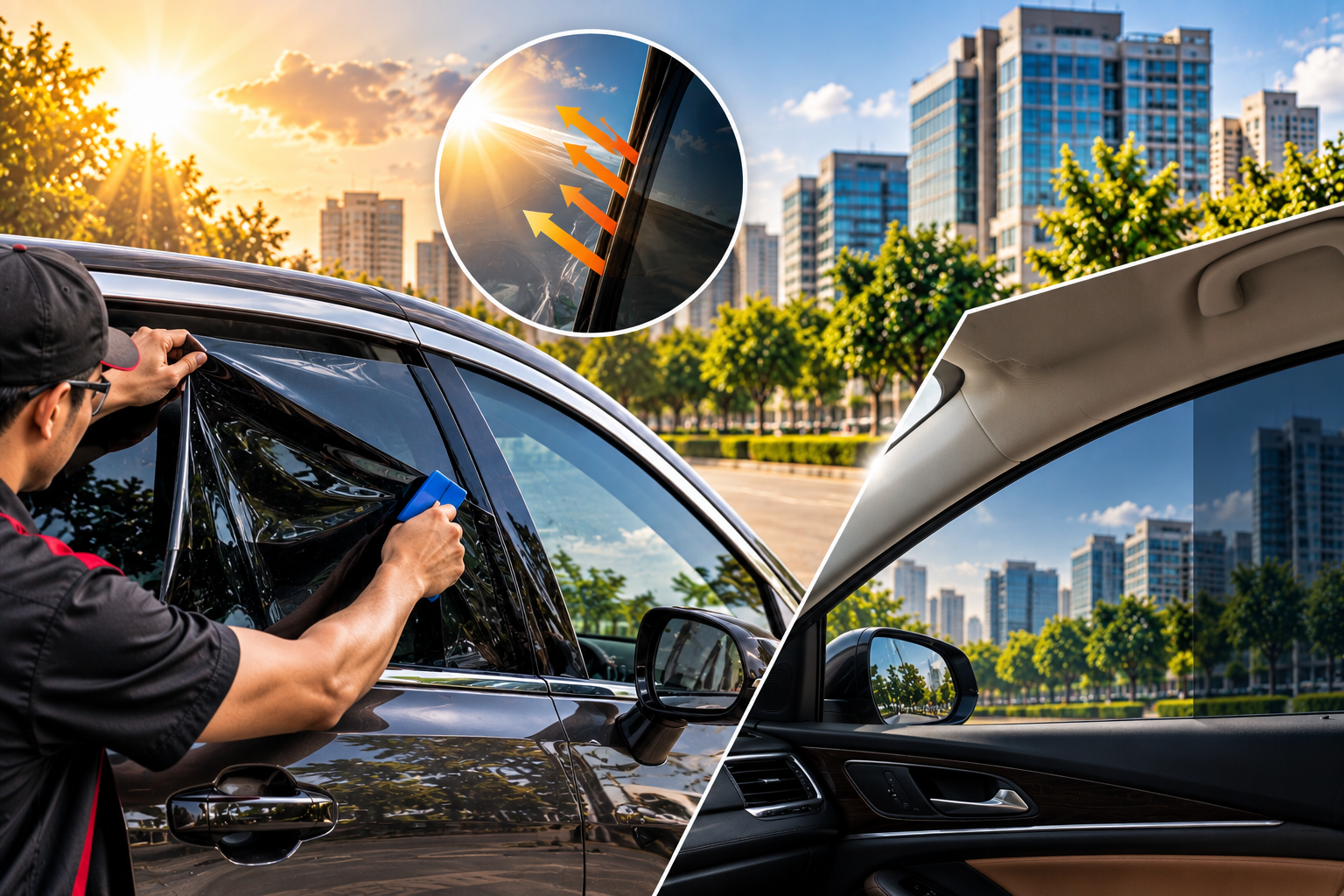
Bangalore's sunny afternoons can make driving uncomfortable, especially when a car has been parked outdoors for several hours. Heat entering through vehicle windows can raise cabin temperatures and increase the demand on air conditioning.
For drivers exploring 3M Sun Control Film in HSR Layout, understanding heat-rejection technology is only part of the decision. Indian vehicle-glass regulations also matter. Before choosing a film, it is essential to understand its potential benefits, technical specifications, installation limitations, and legally permissible alternatives.
Why Do Cars Become So Hot in Bangalore?
A parked car can heat up quickly when sunlight passes through its windows and warms the dashboard, seats, and interior surfaces.
Heat builds up inside the cabin, making the steering wheel, seats, and other surfaces uncomfortable to touch.
Drivers travelling through HSR Layout, Koramangala, Bellandur, and Sarjapur Road may experience this during daytime commuting or outdoor parking.
This is one reason car owners research 3M Sun Control Film in HSR Layout and other heat-management solutions.
However, reducing cabin heat requires understanding both the available technology and the rules governing vehicle modifications.
What Is 3M Sun Control Film?
3M Sun Control Film in HSR Layout refers to the local search for 3M automotive window-film products designed to manage solar energy passing through glass.
Depending on the product, sun control films may reduce solar heat transmission, reject ultraviolet radiation, and help control glare.
Different film technologies can achieve these results through combinations of specialised materials and coatings.
How Does Sun Control Technology Work?
Solar energy reaching a vehicle includes visible light, infrared radiation, and ultraviolet radiation.
A sun control film may reflect, absorb, or otherwise reduce portions of this energy.
The performance depends on the exact film rather than simply how dark it looks.
A lighter-looking film can have different heat-rejection characteristics from a darker film.
Important: Technical performance does not establish whether aftermarket installation is permitted on a vehicle's windscreen or windows in India.
Five Benefits of Automotive Sun Control Technology
Car owners comparing 3M Sun Control Film in HSR Layout often want to understand the actual benefits before reviewing product specifications.
1. Reduced Solar Heat Transmission
A suitable sun control product can reduce the amount of solar energy passing through treated glass.
This can contribute to a more comfortable interior, although results depend on the product, glass, weather, and vehicle conditions.
2. Ultraviolet Radiation Reduction
Certain automotive films are designed to reject a substantial proportion of UV radiation.
Always check the manufacturer's specification for the particular product instead of assuming every film provides identical protection.
3. Improved Glare Management
Some sun control technologies reduce visible glare.
However, excessive darkening can also affect visibility, especially during night driving or poor weather.
4. Potential Interior Protection
Prolonged sunlight exposure can contribute to fading and deterioration of some interior materials.
Reducing certain forms of solar exposure may help limit this effect, but no product can guarantee that interiors will never fade.
5. Improved Thermal Comfort
Managing solar heat can make a vehicle feel more comfortable in suitable conditions.
This does not mean a film will eliminate the need for air conditioning.
Understanding Heat Rejection: What Should Buyers Compare?
Before evaluating 3M Sun Control Film in HSR Layout, learn the technical measurements commonly used in automotive film specifications.
| Technical term | What it tells you |
|---|---|
| Visible Light Transmission (VLT) | Percentage of visible light passing through the glazing or film |
| Total Solar Energy Rejected (TSER) | Percentage of total solar energy rejected under defined testing conditions |
| Infrared Rejection (IRR) | Rejection of infrared energy, measured over a specified wavelength range |
| UV Rejection | Reduction of ultraviolet radiation passing through the material |
| Visible Light Reflectance | Percentage of visible light reflected from the surface |
Why TSER Matters
A high infrared rejection figure alone does not necessarily mean a product provides the greatest overall heat reduction.
TSER is useful because it considers total solar energy under the relevant test conditions.
Compare published specifications using consistent testing methods and confirm whether figures refer to the film alone or the film-and-glass combination.
Are Sun Control Films Legal for Cars in Bangalore?
This is the most important question for anyone searching for 3M Sun Control Film in HSR Layout.
Under the Supreme Court's 2012 decision in Avishek Goenka v. Union of India, aftermarket films and other materials pasted onto vehicle safety glass were prohibited.
The judgment interpreted Rule 100 of the Central Motor Vehicles Rules and made clear that the relevant light-transmission requirements apply to vehicle safety glass, not as permission to add film afterward.
What Are the VLT Requirements?
The requirements discussed in the judgment include:
- At least 70% visible light transmission for front and rear windscreens.
- At least 50% visible light transmission for side windows.
What About Transparent Heat-Rejection Films?
Transparency alone does not establish legal compliance.
Car owners should not assume that clear, ceramic, or high-VLT aftermarket films are permitted on road-going vehicles.
Before considering any vehicle-glass modification, verify the current applicable legal position with the relevant transport authority.
Factory-manufactured glazing that complies with applicable standards is different from applying aftermarket material to existing safety glass.
These percentages do not automatically legalise aftermarket sun films.
Even if a film is advertised as transparent or capable of maintaining these percentages, that does not override the Supreme Court's prohibition.
3M Sun Control Film vs Factory-Tinted Glass
People researching 3M Sun Control Film in HSR Layout should understand the difference between a separately applied film and glass manufactured with its optical characteristics.
| Feature | Aftermarket sun control film | Factory-manufactured compliant glazing |
|---|---|---|
| Construction | Material applied to existing glass | Glass manufactured to specified properties |
| Heat-management performance | Depends on film specification | Depends on glazing specification |
| Installation | Added after manufacture | Supplied as part of vehicle glazing |
| Indian legal position | Subject to Supreme Court prohibition on applied films | Permitted when compliant with applicable vehicle-glass standards |
| Best next step | Verify legal restrictions before considering installation | Consult the vehicle manufacturer about approved options |
For road-going cars, legal compliance should take priority over marketing claims about heat rejection.
How Much Does 3M Sun Control Film Cost in HSR Layout?
The price associated with 3M Sun Control Film in HSR Layout depends on the product specification, glass area, vehicle size, and service requirements.
However, a product being available commercially does not mean it can legally be installed on a road-going vehicle's windows.
Factors That Influence Pricing
The main considerations include the product range, material quantity, installation complexity, and any applicable preparation requirements.
Premium products with different optical or heat-management specifications may be priced differently.
A verified public price list for this specific HSR Layout service is not established here, so quoting a fixed amount would be misleading.
Before requesting a quotation, confirm that the proposed application is lawful and suitable for the intended vehicle or use.
How to Keep Your Car Cooler Without Aftermarket Window Film
If you are considering 3M Sun Control Film in HSR Layout primarily because of cabin heat, several practical alternatives can help.
Choose Shaded Parking
Covered parking can reduce direct sunlight exposure and help limit cabin heat buildup.
Use a Removable Sunshade While Parked
A suitable windscreen sunshade can reduce direct sunlight reaching the dashboard while the vehicle is stationary.
Remove it before driving so it does not obstruct visibility.
Maintain Your Air Conditioning
A properly functioning air-conditioning system helps improve comfort during hot weather.
Consider Manufacturer-Approved Glazing
Ask your vehicle manufacturer whether compliant glazing options are available for your model.
Ventilate the Cabin Safely
Before driving, allowing trapped hot air to escape can improve initial comfort. Never leave children or pets unattended in a parked vehicle.
These measures may offer practical benefits without relying on prohibited aftermarket window applications.
How to Evaluate the Best 3M Sunfilms
Customers looking for 3M Sun Control Film in HSR Layout should avoid choosing products based solely on darkness, advertised percentages, or promotional offers.
The best sunfilms for cars should be evaluated through genuine product specifications, intended application, manufacturer documentation, and legal suitability.
A professional consultation should clearly distinguish technical capabilities from permitted use.
Questions Worth Asking
An informed decision protects both your investment and your compliance with vehicle regulations.
- What is the exact 3M product name?
- What are its published TSER, VLT, and UV rejection specifications?
- Is the proposed application legally permitted?
- Are the claimed benefits supported by product documentation?
- What maintenance or warranty terms apply?
Get Expert Car Care Guidance at 3M Car Care Studio HSR Layout
Choosing the right automotive protection solution requires more than comparing advertised performance figures.
For drivers exploring 3M Sun Control Film in HSR Layout, understanding product technology and Indian vehicle-glass regulations is essential before making a purchase decision.
3M Car Care Studio HSR Layout provides automotive care services, and its team can be contacted for information about available products and suitable alternatives.
Whether your priority is cabin comfort, exterior paint protection, or vehicle maintenance, choose solutions that match your needs and comply with applicable regulations.
Visit 3M Car Care Studio HSR Layout to enquire about available automotive care solutions.
BOOK A CONSULTATION
Talk to Our Team About Your Car
Visit our HSR Layout studio or send an enquiry — we’ll help you pick the right solution for your vehicle.